
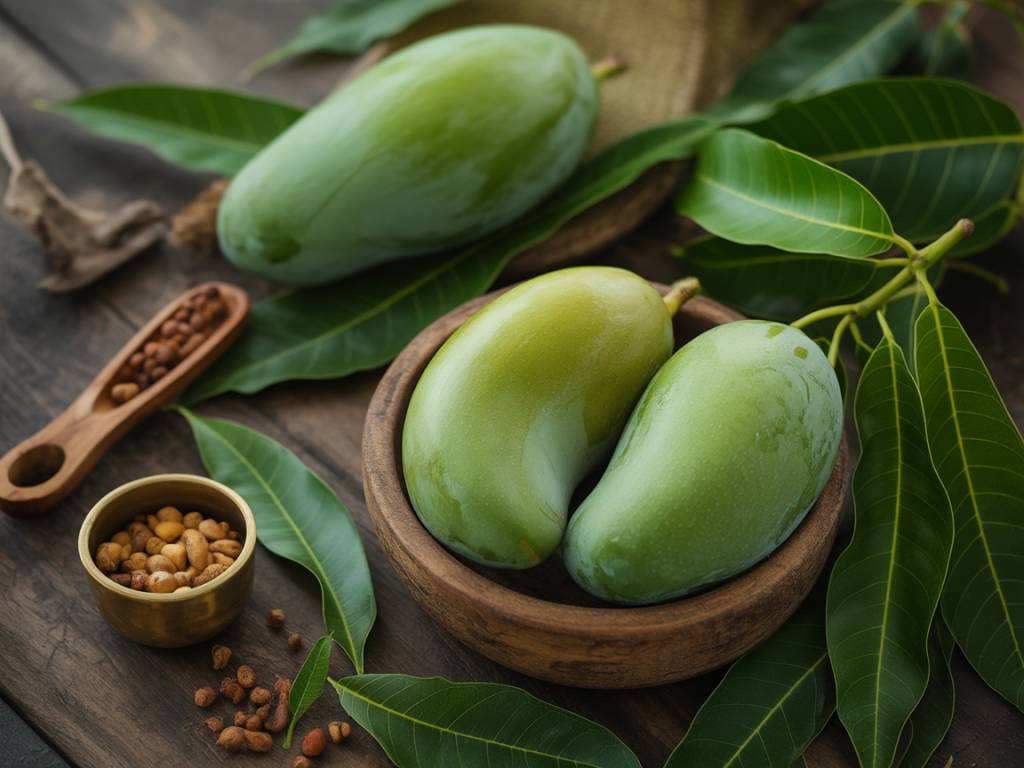
If you only think about the juicy orange flesh when you hear “mango”, you’re missing half the story. In many traditional medicines, it’s the leaves of the mango tree that quietly do the heavy lifting. From blood sugar support to gut health, mango leaves have been brewed, chewed, and powdered for centuries — and modern research is finally starting to catch up.
In this article, we’ll look at 10 potential benefits of mango leaves, how they’re used in traditional practices, and what current science really says. No magic cures, no hype — just a clear, evidence-informed overview and practical ways you can experiment safely.
What exactly are mango leaves?
Mango leaves come from Mangifera indica, the same tropical tree that gives us mango fruits. In Ayurveda, Traditional Chinese Medicine, and several African and South American folk traditions, the young reddish-green leaves are often harvested, dried, and used as:
- Herbal tea (infusion or decoction)
- Powder (mixed into water, smoothies, or recipes)
- Extracts (alcoholic or water-based)
While mango fruit is known for its vitamins and fiber, the leaves are richer in certain polyphenols and bioactive compounds — including mangiferin — that may explain many of their health effects.
Key compounds in mango leaves
To understand the potential benefits, it helps to know what’s inside. Mango leaves are particularly rich in:
- Mangiferin – a xanthone with antioxidant, anti-inflammatory, and potential anti-diabetic properties.
- Flavonoids – such as quercetin and kaempferol, known for antioxidant and vascular effects.
- Phenolic acids – plant compounds that may support metabolic and cardiovascular health.
- Tannins – astringent compounds often involved in antimicrobial and gut-related benefits.
These compounds show up again and again in lab and animal studies exploring blood glucose, blood pressure, inflammation, and more.
Blood sugar support and insulin sensitivity
Across India, the Philippines, and parts of Africa, mango leaf tea is a traditional home remedy for “sugar control”. People typically drink a decoction (leaves simmered in water) in the morning on an empty stomach.
Emerging research gives this practice some backing:
- Mangiferin appears to improve how cells use glucose and may enhance insulin sensitivity in animal and cell studies.
- Some small human studies suggest mango leaf extracts may help reduce post-meal blood glucose and improve certain markers of metabolic health.
What does that mean in practice?
- If you’re at risk of type 2 diabetes, mango leaf tea might be a helpful adjunct to lifestyle changes (diet, movement, sleep) — not a replacement for them.
- If you already take medication for blood sugar, you should not add mango leaf supplements without talking to your healthcare provider, as it could theoretically enhance the effect of your meds.
Antioxidant and anti-inflammatory properties
Many chronic conditions — from cardiovascular disease to cognitive decline — have oxidative stress and low-grade inflammation in common. Mango leaves are loaded with antioxidant compounds that can neutralize free radicals in lab experiments.
Studies in animals suggest mango leaf extracts may:
- Reduce markers of oxidative damage in tissues like the liver and brain.
- Lower inflammatory cytokines under certain conditions.
Does that mean drinking mango leaf tea will “detox” your body? No. Your liver and kidneys already do that job. But regularly consuming antioxidant-rich plants — including mango leaves — may help reduce the long-term oxidative burden, especially when combined with an overall anti-inflammatory lifestyle (think: whole foods, movement, stress management).
Potential cardiovascular support
Cardiovascular health is another area where traditional use and modern research intersect. In folk medicine, mango leaves are sometimes used as a tonic for “the heart and blood”.
What does the science say so far?
- Animal studies suggest mango leaf extracts may help lower total cholesterol and triglycerides, while sometimes increasing “good” HDL cholesterol.
- Their antioxidant effects may help protect blood vessel linings (endothelium) from oxidative damage.
- Some experiments show mild vasodilatory effects — the ability to help blood vessels relax — which could support healthy blood pressure.
Again, this is early-stage research. It doesn’t replace proven interventions like physical activity, a Mediterranean-style diet, and not smoking. But if your cardiovascular risk is a concern, mango leaf tea could be one more supportive habit in your daily routine.
Weight management and metabolic health
You’ll sometimes see mango leaves marketed as a “weight loss hack”. That’s an overstatement. However, they may play a modest role in a smart weight management strategy.
In animal models, mango leaf extracts have shown:
- Improvements in lipid metabolism (how the body processes fats).
- Reduced fat accumulation under certain high-fat diet conditions.
- Better insulin signaling, which ties directly into appetite and fat storage.
The real-world takeaway:
- Mango leaves won’t cancel out ultra-processed foods and a sedentary lifestyle.
- They may, however, gently support metabolic flexibility when combined with a nutrient-dense diet, strength training, and regular movement.
If you’re tracking body composition, energy levels, and blood markers, adding mango leaf tea consistently for a few weeks could be an interesting experiment to see how you respond.
Digestive health and gut comfort
Mango leaves have a long history in traditional medicine as a mild digestive aid. They’re sometimes used for stomach discomfort, diarrhea, or to “strengthen the gut”.
Why might they help?
- The tannins in mango leaves have astringent properties, which can help tighten and tone the gut lining and may slow down excessive intestinal secretions.
- Their antimicrobial compounds might help keep certain unwanted bacteria in check, at least in lab studies.
Some people report that a light mango leaf tea after meals helps reduce bloating or that it gently supports bowel regularity. As always, individual responses vary. If you tend toward constipation, start with a low dose and see how your digestion reacts.
Respiratory and immune support
In several traditional systems, mango leaf preparations are used for mild respiratory issues — cough, bronchial irritation, or seasonal “chills”. Steaming with mango leaves or drinking warm infusions is a common household remedy.
From a mechanistic standpoint:
- Antioxidant and anti-inflammatory compounds may help calm irritated mucous membranes.
- Mild antimicrobial activity against certain bacteria and fungi has been observed in lab studies.
That said, we lack robust human trials here. Think of mango leaves as a pleasant, warming support alongside proven immune-boosting habits: sleep, nutrient-dense food (especially vitamin C and zinc), hydration, and avoiding smoke exposure.
Brain protection and cognitive health (early evidence)
This is one of the more intriguing — but very early — areas of research. In animal models, mangiferin and other compounds from mango leaves have shown potential neuroprotective effects.
Some studies suggest mango leaf extracts may:
- Reduce oxidative damage in brain tissue.
- Improve certain learning and memory tasks in rodents under experimental stress.
- Protect neurons from toxicity in lab settings.
Can we say mango leaves prevent dementia or improve human cognition? No. We’re not there yet. But if you’re building a brain-friendly lifestyle — quality sleep, omega-3 fats, regular exercise, mental challenges — adding polyphenol-rich plants like mango leaves is a logical extension of that strategy.
Skin health and healthy aging
Skin health often mirrors overall inflammation, oxidative stress, and metabolic status. Given their strong antioxidant profile, mango leaves are sometimes used both internally and externally for skin support.
Traditional uses include:
- Washing minor skin irritations with cooled mango leaf decoctions.
- Drinking the tea to “purify the blood” — an old way of describing systemic benefits that show up in the skin.
Modern science adds:
- Antioxidants in mango leaves may help protect skin cells from UV-induced oxidative damage in lab studies.
- Anti-inflammatory compounds could theoretically calm redness or irritation when used appropriately.
If you’re curious, you might:
- Use mango leaf tea as a gentle facial rinse (patch-test first to rule out irritation).
- Incorporate the tea into your hydration routine to support systemic skin health alongside a nutrient-rich diet.
Antimicrobial and oral health benefits
Chewing on young mango leaves or using them as a mouth rinse is a traditional practice in some rural communities for fresher breath and healthier gums.
Lab studies support this partially:
- Extracts from mango leaves show activity against several bacteria and fungi in vitro, including some that can affect the mouth and gut.
- The combination of antimicrobials and tannins may help tighten gums and reduce bacterial growth on the surface.
In a practical sense, mango leaf tea could be used as a mild, natural mouth rinse — especially if you’re trying to reduce your exposure to certain synthetic ingredients. It should not replace regular brushing, flossing, and professional dental care, but it can be a nice extra layer in your oral hygiene routine.
Anti-stress and adaptogenic-like potential
Some animal studies suggest that mangiferin and related compounds in mango leaves may have mild anxiolytic (anti-anxiety) and stress-buffering effects, possibly by modulating neurotransmitters and oxidative stress in the brain.
People who drink mango leaf tea regularly sometimes describe it as “calming but not sedating” — a bit like chamomile, but with a different flavor profile.
While we need more human data, you might experiment with:
- A warm cup of mango leaf tea in the evening as part of a wind-down routine.
- Combining mango leaves with other calming herbs like lemon balm or passionflower (with professional guidance if you’re on medication).
As always, no herb can compensate for chronic overload, inadequate sleep, or unaddressed psychological stressors — but it may help your nervous system cope a little better.
How to use mango leaves in everyday life
Curious to try mango leaves in a realistic, enjoyable way? Here are some practical options.
Mango leaf tea (simple method)
- Use 5–10 dried mango leaves (or 3–5 fresh, well-washed leaves).
- Rinse briefly under cold water.
- Simmer in about 500 ml (2 cups) of water for 10–15 minutes.
- Let steep another 5–10 minutes, then strain.
- Drink warm or at room temperature, plain or with a little lemon.
Metabolic-support morning drink
- Brew a strong mango leaf decoction in the evening.
- Let it cool and keep in the fridge.
- In the morning, drink 1 small cup (100–150 ml) on an empty stomach.
- Track how you feel: energy, hunger, digestion, and if possible, blood glucose.
Herbal blend for relaxation
- Mix mango leaves with calming herbs like chamomile, lemon balm, or lavender.
- Use as a bedtime infusion to support your sleep routine.
If you prefer convenience, standardized mango leaf extracts are available in capsule form. These deliver higher doses of mangiferin but should be used more cautiously and ideally with professional guidance.
Safety, side effects, and who should be careful
For most healthy adults, moderate use of mango leaf tea appears to be safe. Traditional use over centuries is a useful (though not perfect) indicator.
Still, keep in mind:
- Blood sugar: If you take medication for diabetes or have a history of hypoglycemia, use mango leaf tea only under medical supervision.
- Allergies: If you’re allergic to mango fruit or other Anacardiaceae family members (like cashew or pistachio), introduce mango leaves very cautiously or avoid them entirely.
- Pregnancy and breastfeeding: There’s insufficient safety data for concentrated extracts. Light culinary use (occasional tea) is likely low-risk, but speak with your healthcare provider first.
- Kidney or liver issues: Any new herb, especially in extract form, should be cleared with your doctor.
Start low — for instance, half a cup of mild tea per day — and observe how you feel over a week or two: digestion, sleep, energy, and any unusual symptoms.
Putting it all together
Mango leaves are a great example of the sweet spot between tradition and science:
- Traditional practices highlight them for blood sugar, digestion, and respiratory comfort.
- Modern research is beginning to validate several of these uses, especially for metabolic and antioxidant effects.
If you already enjoy mangoes, exploring the leaves is a logical next step in a whole-plant, waste-reducing mindset. Think of them not as a miracle cure, but as a nuanced tool — one more ally in a broader strategy that includes solid nutrition, consistent movement, quality sleep, and stress management.
Used thoughtfully, mango leaves can add both flavor and function to your health routine. And that, in itself, is a pretty appealing benefit.


