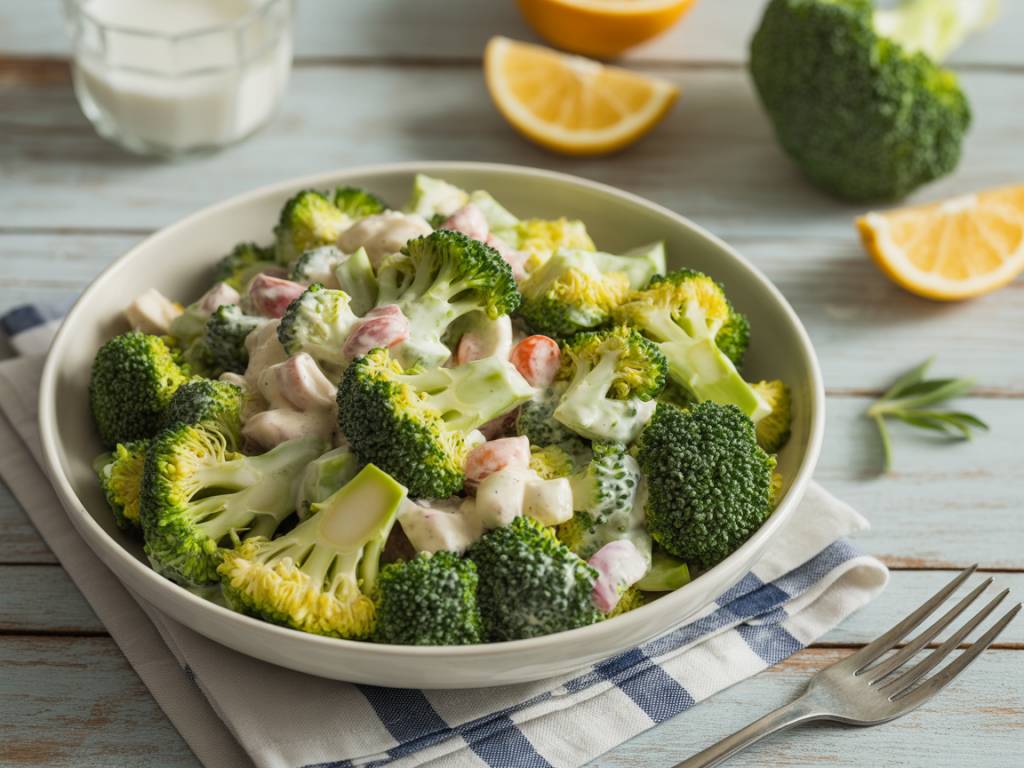
Broccoli salad is one of those side dishes that looks innocent next to your grilled chicken or steak… but can secretly carry more calories than the main dish. Between the mayo-heavy dressing, bacon, cheese, and sugar, this “healthy” salad can quickly turn into a calorie bomb.
The good news? You don’t have to give it up. With a few smart tweaks, you can keep all the crunch, flavor, and satisfaction while dramatically improving the nutritional profile.
In this article, we’ll break down how many calories are typically in broccoli salad, what makes it so energy-dense, and how to rebuild this classic dish into a lighter, protein-rich, and genuinely healthy option.
What’s Really in a Classic Broccoli Salad?
Let’s start with the traditional version you’ll find at potlucks, barbecues, or in the supermarket deli. It usually contains:
- Raw broccoli florets
- Mayonnaise (often full-fat)
- Sugar (sometimes a lot)
- Bacon bits or crispy bacon
- Cheddar cheese
- Raisins or dried cranberries
- Sunflower seeds or nuts
- Occasionally red onion and vinegar
On paper, there are some fantastic ingredients here: broccoli, nuts/seeds, and sometimes a bit of fruit. The real issue lies in the dressing and the extras layered on top of it.
Most classic recipes use a base of mayonnaise, sugar, and sometimes a bit of vinegar. Mayonnaise is energy-dense (around 680–720 kcal per 100 g), and sugar adds empty calories without any fiber or protein to balance it.
How Many Calories Are in Broccoli Salad?
Calories will vary widely depending on the recipe, but here’s a realistic range for a standard, full-fat broccoli salad made with mayo, bacon, and cheese:
- Per 1 cup (about 140–150 g): ~250–350 kcal
- Per 100 g: ~160–220 kcal
Why such a big range? Because small changes in ingredients make a huge difference:
- A few extra tablespoons of mayo can add 100–200 kcal easily.
- Generous handfuls of cheese or bacon can bump it up even more.
- Sweetened dried fruit and sugar in the dressing add quick-hit calories with almost no satiety.
So yes, that “little” scoop of broccoli salad can rival a slice of pizza in terms of calories, especially if you go back for seconds.
Where Do the Calories Come From?
To make smarter swaps, it helps to know the main culprits. In a classic broccoli salad, calories primarily come from:
- Mayonnaise: High in fat and very calorie-dense. One tablespoon (~15 g) has about 90–100 kcal.
- Cheese: Great for flavor and some protein, but also high in fat. Around 110 kcal per 30 g (1 oz).
- Bacon: Adds sodium, saturated fat, and around 40–50 kcal per slice.
- Sugar and dried fruit: Sugar in the dressing plus raisins or sweetened cranberries can easily add 50–100 kcal per serving.
- Nuts and seeds: Healthy, but energy-dense. Around 160–200 kcal per 30 g (1 oz).
By contrast, broccoli itself is very low in calories and high in volume:
- Broccoli: ~30–35 kcal per 100 g, plus fiber, vitamin C, vitamin K, folate, and powerful antioxidants like sulforaphane.
In other words, the star ingredient is not the problem. The “extras” are.
How Many Calories Should a Healthier Broccoli Salad Have?
If you’re aiming for a side dish that supports your health, energy, and body composition, a more reasonable target would be:
- Per 1 cup (140–150 g): ~120–200 kcal
This range allows you to keep some richness and flavor while leaving room on your plate for lean protein and possibly a whole-grain carb source. You don’t want your side salad to “use up” half your daily calorie budget.
To get there, we need to reduce the calorie-dense ingredients and increase the volume and protein content, without turning the dish into a sad, flavorless compromise.
Smart Swaps to Make Broccoli Salad Healthier
Let’s rebuild the salad, step by step, focusing on taste, texture, and satiety.
Lighten the Dressing (Without Losing Creaminess)
The dressing is where you can make the biggest calorie savings.
Instead of a 100% mayo base, try these alternatives:
- Greek yogurt + light mayo: Replace most of the mayo with plain Greek yogurt (2% or 0%). For example, use 3 parts yogurt to 1 part mayo. You keep the creamy mouthfeel, but with far fewer calories and more protein.
- Greek yogurt + olive oil: For a healthier fat profile, use mostly yogurt with a splash of extra-virgin olive oil for richness.
- Skyr or fromage blanc: If you have access to these, they work similarly to Greek yogurt: thick, tangy, high in protein.
For flavor, add:
- Apple cider vinegar or white wine vinegar
- A teaspoon of Dijon mustard
- Salt, pepper, garlic powder, onion powder
- Lemon juice and zest for freshness
Result: a creamy, tangy dressing with roughly half (or less) of the calories of the traditional version.
Cut the Added Sugar
Many classic recipes include 2–4 tablespoons of sugar in the dressing. That’s 100–200 kcal of pure sugar for the bowl.
Better options:
- Use less sugar: Often, simply cutting the amount in half goes unnoticed, especially if your palate is used to less-sweet dishes.
- Use honey or maple syrup in moderation: They’re still sugars, but a small amount (1–2 teaspoons) can enhance flavor without overloading calories.
- Skip it completely: Rely on natural sweetness from ingredients like apple, carrot, or a small handful of raisins instead.
Over time, as you reduce added sugar in recipes, your taste buds adapt. The salad will still feel balanced thanks to the acidity from vinegar and the creaminess from the dressing.
Rethink Bacon and Cheese
Bacon and cheddar are big contributors to both flavor and calories. You don’t necessarily have to remove them, but you can use them more strategically.
Options:
- Use them as a garnish, not a main ingredient: A sprinkle of crispy bacon or a small amount of sharp aged cheddar can be enough to satisfy without overloading calories.
- Swap regular bacon for turkey bacon or lean ham: These can reduce saturated fat and calories per serving.
- Use stronger cheeses: A little bit of aged parmesan or extra-sharp cheddar goes a long way. You can get intense flavor from a smaller quantity.
Think of these as “accent flavors” rather than bulk components of the salad.
Add More Protein and Fiber
If you want your broccoli salad to support weight management, training recovery, or simply keep you full for longer, adding protein and fiber is critical.
Some ideas:
- Greek yogurt in the dressing: Adds a significant protein boost.
- Chickpeas or white beans: A small handful tossed into the salad increases both protein and fiber.
- Edamame (soybeans): Great texture and high in protein.
- Seeds: Sunflower, pumpkin, or hemp seeds add healthy fats and some protein. Keep the portion moderate.
Broccoli already provides fiber, but you can increase total fiber by adding:
- Finely chopped red cabbage
- Shredded carrots
- Diced apple (skin on)
This not only boosts nutrition; it adds crunch and color, making the salad more appealing.
Watch the Dried Fruits and Nuts
Dried cranberries and raisins give that sweet, chewy contrast many people love. The problem is that most commercial dried fruits are sweetened, and they’re calorie-dense because the water (and volume) has been removed.
Some ways to manage this:
- Use unsweetened dried fruit where possible.
- Cut the amount in half and add fresh fruit like chopped apple or grapes for more volume and fewer calories.
- Measure, don’t pour from the bag: A “small handful” can quickly turn into 3–4 servings.
The same applies to nuts and seeds. They’re healthy, but easy to overdo. Measure out 1–2 tablespoons per person instead of adding them freely.
Healthier Broccoli Salad: Example Recipe
Here’s a practical template you can adapt based on your preferences and what you have in your kitchen.
Serves: 4–6 as a side Approximate calories: 140–190 kcal per cup (depending on exact ingredients)
Ingredients:
- 400 g broccoli florets, chopped into small pieces
- 50 g shredded carrot
- 50 g finely sliced red onion
- 1 small apple, diced (with skin)
- 2 tablespoons raisins or unsweetened dried cranberries
- 2 tablespoons sunflower seeds or pumpkin seeds
- 30–40 g sharp cheddar cheese, finely grated (optional)
- 2 slices turkey bacon or 1–2 slices regular bacon, cooked and crumbled (optional)
For the dressing:
- 120 g plain Greek yogurt (0–2% fat)
- 30 g light mayonnaise (about 2 tablespoons)
- 1–2 tablespoons apple cider vinegar
- 1 teaspoon Dijon mustard
- 1–2 teaspoons honey or maple syrup (optional, adjust to taste)
- Salt and pepper to taste
- Juice of ½ lemon (optional, for extra freshness)
Instructions:
- In a large bowl, combine broccoli, carrot, red onion, apple, raisins/cranberries, and seeds.
- In a separate bowl, whisk together Greek yogurt, mayo, vinegar, mustard, honey (if using), salt, pepper, and lemon juice until smooth.
- Pour the dressing over the vegetables and mix thoroughly until everything is well coated.
- Add the grated cheese and crumbled bacon on top, and gently fold into the salad.
- Refrigerate for at least 30–60 minutes before serving to let the flavors meld.
This version still tastes indulgent, but you’ve significantly improved the balance of protein, fiber, and healthy fats while reducing overall calories.
Should You Blanch the Broccoli?
Raw broccoli gives maximum crunch and preserves heat-sensitive nutrients like vitamin C. However, some people find it difficult to digest or too hard in texture.
An easy compromise is to lightly blanch the broccoli:
- Bring a pot of water to a boil, salt it lightly.
- Add the broccoli florets and cook for 60–90 seconds.
- Drain immediately and plunge into ice water to stop the cooking.
- Dry well before adding to the salad.
This keeps the vibrant green color, softens the texture slightly, and can make the salad more digestible without turning the broccoli mushy.
How to Fit Broccoli Salad into Different Goals
Depending on your objectives—fat loss, muscle gain, general health—you can adjust the recipe further.
For fat loss:
- Use 0–2% Greek yogurt and minimal mayo.
- Go light on cheese and bacon or remove them entirely.
- Increase the broccoli and low-calorie veggies to add volume.
- Keep nuts, seeds, and dried fruits measured and moderate.
For muscle gain or high training volume:
- Use 2–5% Greek yogurt for more calories and creaminess.
- Add extra seeds or a few more nuts for healthy fats.
- Consider tossing in chickpeas, edamame, or grilled chicken for extra protein.
For general health and everyday eating:
- Find a balance that feels satisfying but not heavy.
- Keep the protein high (thanks to yogurt and legumes).
- Use good-quality fats (olive oil, nuts, seeds) in reasonable portions.
Common Mistakes That Turn Broccoli Salad into a Calorie Trap
Even with a “healthier” recipe, certain habits can quietly push calories up again:
- Not measuring the dressing: It’s easy to “just add a bit more” and end up doubling the calories.
- Heavy hands with toppings: Cheese, bacon, nuts, and dried fruit are all energy-dense. A small extra handful here and there adds up quickly.
- Treating it as a light side and piling on other calorie-dense foods: If your plate already has creamy potatoes, fatty meats, and sauces, even a lighter broccoli salad will push the meal over the top.
The goal isn’t to obsess over every gram, but to be aware of which ingredients move the nutritional needle the most. Small, intentional choices make a big difference over time.
Key Takeaways for a Healthier Broccoli Salad
If you want the quick summary to apply today, here it is:
- Classic broccoli salad often ranges from 250–350 kcal per cup due to mayo, sugar, cheese, and bacon.
- Broccoli itself is low in calories and full of fiber, vitamins, and antioxidants—the problem is the dressing and extras.
- Swap most of the mayo for Greek yogurt, and keep a small amount of mayo or good-quality oil for flavor and texture.
- Reduce or remove added sugar; rely more on vinegar, mustard, and a bit of fruit for balance.
- Use cheese and bacon as flavor accents, not main ingredients.
- Add beans, edamame, or extra seeds in moderation to boost protein and satiety.
- Mind your portions of nuts, seeds, and dried fruit—they’re healthy but energy-dense.
Broccoli salad doesn’t have to be “all or nothing” — either ultra-rich or painfully diet-friendly. With a few thoughtful adjustments, you can enjoy this classic side dish regularly, whether you’re focused on performance, fat loss, or simply feeling better in your body.