Skip to content

Articles récents

  • 10 benefits of cantaloupe for hydration immune support and healthy skin
  • 0 carb drinks you can enjoy while cutting sugar and managing weight
  • 10 benefits of snake plant for indoor air quality and better sleep
  • 1 blueberries calories and the surprising nutrient power in a tiny serving
  • Daily intake of milk and how it fits into a modern healthy eating pattern

Most Used Categories

  • Nutrition (42)
  • Health (10)
  • Sports (7)
  • Products (1)
Skip to content
Nutrition and Health

Nutrition and Health

  • Home
  • Health
  • Nutrition
  • Products
  • Recipes
  • Sports
  • Contact Us
  • Home
  • Sports
  • 10 benefits of squats for strength fat loss and healthy aging
10 benefits of squats for strength fat loss and healthy aging

10 benefits of squats for strength fat loss and healthy aging

Paul8 décembre 202513 décembre 2025

Squats are often called the “king of exercises” for a reason. With a simple movement that your body was literally designed to perform, you can build strength, burn fat, protect your joints, and age more gracefully. Not bad for something you can do in your living room without any equipment.

In this article, we’ll explore 10 key benefits of squats for strength, fat loss, and healthy aging, plus clear tips to get started safely—whether you’re 20, 50, or 70.

What exactly is a squat?

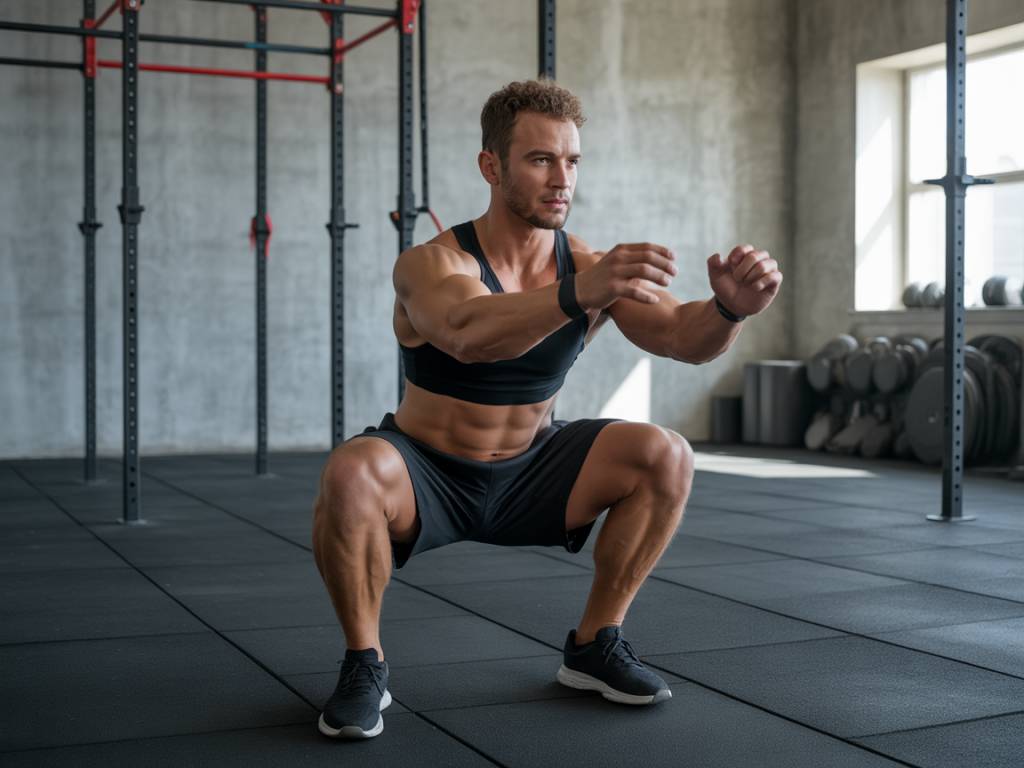
Before talking benefits, let’s clarify what we’re dealing with. A basic bodyweight squat looks like this:

  • Feet about shoulder-width apart
  • Toes slightly turned out
  • Chest open, eyes forward
  • Hips moving back and down, as if sitting into a chair
  • Heels flat on the floor
  • You go as low as your mobility allows without pain, then stand back up
  • That’s it. No fancy machines. Just your body moving the way it’s supposed to move.

    Build serious lower-body strength

    Squats target several major muscle groups at the same time:

  • Quadriceps (front of the thighs)
  • Hamstrings (back of the thighs)
  • Glutes (your butt muscles)
  • Calves
  • Core muscles that stabilize your spine
  • By working so many muscles together, squats are one of the most efficient strength builders you can do. Unlike isolated exercises (like leg extensions), squats mimic real-life movements—standing up, sitting down, lifting objects—so the strength you gain translates directly to everyday life.

    For example, if you struggle to stand up from low chairs or feel your legs “burn” after stairs, improving your squat strength can make those tasks dramatically easier within a few weeks.

    Boost fat loss and metabolism

    Squats burn calories during the workout, of course. But their real power lies in what happens afterward.

    Because squats use so many large muscles at once, they stimulate your body to build and maintain lean muscle mass. And muscle is metabolically active tissue—it burns more calories at rest than fat does.

    This means that by regularly including squats in your week, you can:

  • Increase your daily energy expenditure, even when you’re not training
  • Improve body composition (more muscle, less fat)
  • Support long-term weight management rather than yo-yo dieting
  • Pairing squats with a protein-rich diet and reasonable calorie intake creates an ideal environment for fat loss while keeping your body strong and functional.

    Protect your joints instead of “ruining” them

    You may have heard people say, “Squats are bad for your knees.” When done with poor technique or too much load, that can be true. But when performed correctly, squats can actually protect your joints.

    Here’s why:

  • Stronger muscles around your knees and hips help stabilize the joints
  • Squats encourage healthy blood flow to cartilage and connective tissues
  • Controlled movement helps maintain and improve joint range of motion
  • Research generally shows that appropriately loaded squats do not harm healthy knees. In fact, athletes and older adults who squat with proper form often report fewer aches and pains over time.

    If your knees are sensitive, you can adjust:

  • Reduce range of motion (go less deep at first)
  • Use support (hold onto a stable surface or use a box/chair)
  • Focus on slow, controlled reps instead of speed
  • Think of squats as a way to “nourish” your joints, not punish them.

    Support healthy aging and independence

    One of the clearest predictors of independence as we age is lower-body strength—especially the ability to stand up from a chair without using your hands.

    And what is standing up from a chair? A squat.

    Regular squatting helps you:

  • Maintain the strength needed for daily tasks (standing up, climbing stairs, carrying groceries)
  • Reduce the risk of falls by improving balance and leg stability
  • Preserve muscle mass, which naturally declines with age (sarcopenia)
  • In studies on older adults, strength training with movements like squats is consistently linked to better quality of life, more autonomy, and even reduced risk of all-cause mortality.

    If you want to be the 80-year-old who still gets up from the floor easily and enjoys travel, squats are an excellent investment.

    Strengthen your core (without endless crunches)

    During a squat, your core has one crucial job: keep your spine stable while your hips and knees move.

    To do that, your body recruits:

  • Deep abdominal muscles (transverse abdominis)
  • Obliques
  • Spinal erectors (muscles along your spine)
  • Pelvic floor muscles
  • This kind of “functional core training” is far more useful for daily life than hundreds of crunches. You’re teaching your body to resist unwanted movement and transfer power efficiently between your upper and lower body.

    Result? Better posture, reduced risk of lower back pain, and a stronger, more stable midsection.

    Improve balance, coordination, and body awareness

    Squats are not just about muscles; they also train your nervous system.

    Each rep requires you to coordinate many joints and muscle groups while staying balanced on your feet. Over time, this improves:

  • Proprioception (your sense of where your body is in space)
  • Neuromuscular coordination (how efficiently your brain and muscles communicate)
  • Overall balance and stability
  • This is especially valuable as we age, when balance naturally tends to decline. Better balance means fewer trips, fewer falls, and more confidence when moving on uneven ground or in crowded places.

    Enhance sports performance and everyday power

    If you practice any sport—running, cycling, football, tennis, skiing—squats can make you better at it.

    Why? Because they build the engine of athletic performance: strong, powerful legs and hips.

    Regular squats can help you:

  • Run faster by improving stride power
  • Jump higher by strengthening glutes and quads
  • Change direction more quickly and safely
  • Generate more force from the ground in almost any sport
  • Even if you’re not an athlete, “power” matters. It’s what lets you quickly step out of the way of a car, catch yourself during a slip, or lift something heavy without straining.

    Support bone density and protect against osteoporosis

    Bone, like muscle, responds to stress. When you load your skeleton—through resistance training like squats—it adapts by becoming stronger and denser.

    This is particularly important for:

  • Women after menopause, when bone loss accelerates
  • Men over 50
  • Anyone with a family history of osteoporosis
  • Weight-bearing exercises such as squats stimulate bone formation, especially in areas prone to fractures: hips, femurs, and spine. Combined with adequate calcium, vitamin D, and protein intake, they form a powerful prevention strategy against osteoporosis.

    Time-efficient, scalable, and accessible to everyone

    One of the underrated benefits of squats: they’re practical.

    You can do them:

  • Anywhere: at home, at the gym, in a hotel room
  • With or without equipment
  • In short sessions (even 5–10 minutes can be effective)
  • And they are infinitely scalable. Depending on your level, you can choose:

  • Assisted squats holding onto a chair or counter
  • Box or chair squats (sitting and standing)
  • Classic bodyweight squats
  • Goblet squats (holding a dumbbell or kettlebell)
  • Barbell back or front squats
  • Single-leg variations (for advanced trainees)
  • Whatever your starting point, there is a squat variation that fits you today—then you can gradually increase difficulty as you progress.

    Boost mood, energy, and mental resilience

    We often talk about the physical benefits of squats, but the mental side is just as interesting.

    Like other forms of exercise, squats can:

  • Increase the release of endorphins and other “feel-good” neurotransmitters
  • Improve sleep quality
  • Reduce stress and anxiety levels
  • Build confidence as you see your strength and mobility improve
  • There’s also a psychological effect in regularly performing a movement that was initially difficult. When you realize that you can now do 10, 20, or 30 good squats when before you struggled with 5, it reinforces a powerful message: you are capable of changing your body and your health.

    How to squat safely: key technique tips

    To fully enjoy the benefits of squats, form matters. Here are the essentials:

  • Start with bodyweight only
  • Resist the urge to load up too quickly. Master the movement first, then add difficulty.

  • Set your stance
  • Stand with feet about shoulder-width apart. Slightly turn your toes outward. Everyone’s hip anatomy is different; adjust until the movement feels natural and pain-free.

  • Brace your core
  • Take a breath, lightly tighten your abs as if preparing to be poked, and keep your chest open without over-arching your lower back.

  • Initiate with the hips
  • Think “hips back, then down,” like sitting into a chair. This helps protect your knees and keep balance.

  • Keep heels on the floor
  • If your heels lift, reduce depth or widen your stance slightly. You can also elevate your heels on small plates as a temporary mobility aid.

  • Go to a comfortable depth
  • There is no universal “perfect” depth. Aim for a pain-free range where you can maintain control and good alignment. Over time, your range often improves.

  • Drive up through the feet
  • On the way up, press evenly through your whole foot, especially mid-foot and heel. Imagine pushing the floor away from you.

    A simple squat routine to start today

    Here’s a beginner-friendly session you can do 2–3 times per week. No equipment required.

    Warm-up (5 minutes)

  • 1–2 minutes of brisk walking on the spot
  • 10 leg swings per leg (front to back, then side to side)
  • 10 hip circles in each direction
  • Main set

  • Squats: 3 sets of 8–12 reps
  • Rest 60–90 seconds between sets
  • If 3 sets feel easy, add:

  • Reverse lunges: 2 sets of 8–10 reps per leg
  • Glute bridge on the floor: 2 sets of 12–15 reps
  • Progression ideas

  • Increase reps up to 15 per set
  • Add a pause at the bottom (2–3 seconds)
  • Hold a backpack loaded with books in front of you (goblet squat style)
  • The goal is not to destroy your legs on day one, but to build a sustainable habit. You should feel that you’ve worked, but still be able to walk the next day.

    Common mistakes to avoid

    A few frequent errors can limit results or increase the risk of discomfort. Watch out for:

  • Knees collapsing inward
  • Think about gently pushing your knees out in the same direction as your toes.

  • Rounding the lower back at the bottom
  • If this happens, reduce range of motion and work on hip and ankle mobility.

  • Holding your breath too long
  • Use a simple rhythm: inhale before you go down, exhale as you stand up.

  • Rushing the reps
  • Slow, controlled squats are more effective and safer than fast, sloppy ones.

    How to integrate squats into your weekly routine

    You don’t need complex programming. Here are a few easy ways to implement squats:

  • Option 1: Squat “snacks” throughout the day
  • Do 10 squats every time you make a coffee or take a short break from your desk. Accumulated over the day, this can easily reach 50–100 reps without a formal workout.

  • Option 2: Two focused lower-body sessions per week
  • For example:

  • Monday: Squats + lunges + glute bridges
  • Thursday: Squats + step-ups + calf raises
  • Option 3: Full-body sessions
  • Combine squats with upper-body and core exercises (push-ups, rows, planks) for a complete workout 2–3 times per week.

    The “best” approach is the one you’ll actually stick to. Consistency beats perfection.

    Key takeaways

    Squats offer an impressive list of benefits:

  • Build powerful legs and glutes
  • Support fat loss and metabolic health
  • Protect joints when performed correctly
  • Preserve independence and mobility as you age
  • Strengthen your core and improve posture
  • Enhance balance, coordination, and sports performance
  • Stimulate bone density and help prevent osteoporosis
  • Fit easily into busy schedules
  • Scale from beginner to advanced without special equipment
  • Boost mood, energy, and confidence
  • You don’t need a gym membership, fancy shoes, or the “perfect” program to start. Choose a variation that feels safe, follow the basic technique tips, and commit to a few sessions per week. Your future self—stronger, leaner, and more resilient—will thank you.

    Navigation de l’article

    Previous: 10 benefits of chia seeds for heart health gut health and steady energy
    Next: Daily intake of milk and how it fits into a modern healthy eating pattern

    Related Posts

    10 benefits of pilates for core strength flexibility and back pain relief

    10 benefits of pilates for core strength flexibility and back pain relief

    31 octobre 202513 décembre 2025 Paul
    10 benefits of exercise on the brain including memory mood and focus

    10 benefits of exercise on the brain including memory mood and focus

    26 octobre 202513 décembre 2025 Paul
    Whey and running: how protein supports endurance and recovery

    Whey and running: how protein supports endurance and recovery

    23 février 202528 février 2025 Paul

    Latest Articles

    • 10 benefits of cantaloupe for hydration immune support and healthy skin
    • 0 carb drinks you can enjoy while cutting sugar and managing weight
    • 10 benefits of snake plant for indoor air quality and better sleep
    • 1 blueberries calories and the surprising nutrient power in a tiny serving
    • Daily intake of milk and how it fits into a modern healthy eating pattern

    Categories

    • Health
    • Nutrition
    • Products
    • Sports

    Welcome to Nutrition-and-health.com – Your Guide to a Healthier You

    Hello and a warm welcome to Nutrition-and-health.com! As the editor of this site, I'm thrilled to have you join our community dedicated to exploring the vital connection between what we eat and how we live.

    In today's fast-paced world, navigating the vast amount of information on health and nutrition can be overwhelming. Our mission at Nutrition-and-health.com is to cut through the noise and provide you with clear, reliable, and actionable information to help you make informed choices for your well-being.

    What You'll Find on Nutrition-and-health.com:

    We've carefully curated our site to offer a comprehensive resource covering various aspects of nutrition and health:

    • Nutrition Insights: Dive into articles exploring the fundamentals of healthy eating, the importance of macronutrients and micronutrients, the benefits of different food groups, and practical tips for building balanced meals. We break down complex nutritional science into easy-to-understand language.
    • Health & Wellness: Discover content focused on overall health and well-being, including articles on fitness, mental health, sleep hygiene, stress management, and preventative care. We believe that good health encompasses more than just diet.
    • Healthy Recipes: Explore our collection of delicious and nutritious recipes designed to inspire healthy cooking at home. From quick weeknight meals to satisfying snacks, we offer options for various dietary needs and preferences.
    • Expert Advice: Benefit from insights and tips from our team of writers and contributors, including registered dietitians, nutritionists, and health professionals. We strive to bring you evidence-based information you can trust.
    • Practical Guides: Find helpful guides and resources on topics like meal planning, grocery shopping tips, understanding food labels, and making healthy choices when eating out. We aim to empower you with the tools you need to succeed.
    • Latest Research: Stay informed about the latest findings and trends in nutrition and health research. We'll keep you updated on important developments and their implications for your health.

    Why Choose Nutrition-and-health.com?

    • Reliable Information: Our content is thoroughly researched and based on credible scientific sources. We prioritize accuracy and strive to provide you with trustworthy information.
    • Easy to Understand: We believe that health information should be accessible to everyone. We present complex topics in a clear, concise, and engaging manner.
    • Actionable Advice: We go beyond just providing information. Our goal is to equip you with practical tips and strategies that you can easily incorporate into your daily life.
    • Your Partner in Health: We're here to support you on your journey to a healthier lifestyle. Whether you're looking to improve your diet, boost your energy levels, or simply learn more about nutrition 1 and health, we're here to guide you.

    We invite you to explore Nutrition-and-health.com, delve into the topics that interest you most, and make use of the wealth of information we have to offer. We are constantly updating our site with new content, so be sure to check back often!

    Thank you for visiting, and we hope you find our website a valuable resource on your path to a healthier and happier life.

    Copyright 2025 - © Nutrition-and-health.com : Your Guide to a Healthier You
    Go to mobile version