


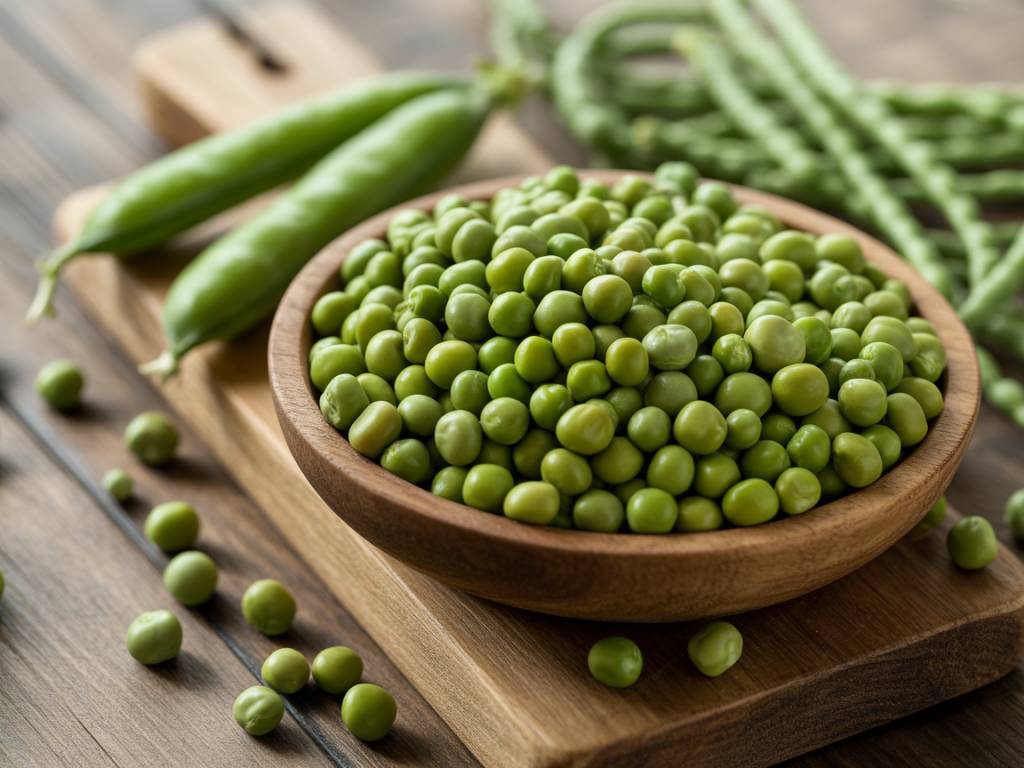
Peas often get thrown into the same basket as beans, lentils, and even random “green veggies.” But when you’re trying to optimize your plant-based protein intake, those categories actually matter. Are peas beans? Are they legumes? And most importantly: what does that mean for your meals, your macros, and your gut?
Let’s unpack all of that in a clear, no-nonsense way so you know exactly how to use peas in a smart, protein-focused diet.
Peas, beans, legumes: what’s the difference?
First, some quick definitions to avoid confusion:
Legumes are a big plant family (Fabaceae) that includes:
- Peas
- Beans (kidney, black, pinto, etc.)
- Lentils
- Chickpeas
- Soybeans
- Peanuts
So, all peas and beans are legumes, but not all legumes are peas or beans.
Peas are the seeds of the plant Pisum sativum. When you eat “green peas”, you’re usually eating them fresh or frozen, harvested before they fully mature.
Beans generally refer to mature seeds from several genera (like Phaseolus and Vigna), usually dried, such as:
- Black beans
- Kidney beans
- Pinto beans
- Navy beans
- Adzuki beans
So, are peas beans? No. But are they legumes? Absolutely yes.
From a botany point of view, that’s the story. From a nutrition point of view, it gets more interesting.
Peas vs beans vs other legumes: how do they compare nutritionally?
If you’re building a plant-based or plant-forward diet, you want to know: how much protein do peas actually give you compared to beans, lentils, or chickpeas?
Here’s a rough comparison for cooked legumes (values per 100 g):
- Green peas (cooked): ~5 g protein, ~11 g carbs, ~4 g fiber
- Lentils (cooked): ~9 g protein, ~20 g carbs, ~8 g fiber
- Chickpeas (cooked): ~9 g protein, ~27 g carbs, ~8 g fiber
- Black beans (cooked): ~8–9 g protein, ~23 g carbs, ~8 g fiber
- Kidney beans (cooked): ~8–9 g protein, ~22 g carbs, ~7 g fiber
Key takeaway: peas have less protein per 100 g than most cooked beans or lentils. They’re still a useful source, but they’re not at the top of the legume-protein leaderboard.
However, peas do have their own advantages:
- They’re usually easier to digest than some beans for many people.
- They cook very quickly (or don’t need cooking at all if frozen pre-cooked).
- They’re very versatile (sides, soups, spreads, smoothies via pea protein, etc.).
So yes, they’re legumes, and yes, they count toward your plant-based protein—but with a different profile and role compared to beans or lentils.
What about pea protein powder – is it really “just peas”?
When you see “pea protein” on a label, it’s almost always made from yellow split peas (a mature, dried form of peas), not green peas. These are still peas, still legumes, but the processing is important.
Pea protein isolate or concentrate is produced by:
- Drying and milling yellow peas
- Separating out much of the starch and fiber
- Concentrating the protein fraction
The result? A powder that usually contains 75–90% protein by weight. That’s a massive jump compared to whole cooked peas at ~5 g per 100 g.
To put it into perspective:
- 30 g scoop of pea protein → ~20–25 g of protein
- 100 g cooked green peas → ~5 g of protein
So when you see people raving about peas as a protein powerhouse, they’re often (consciously or not) talking about pea protein powder, not a small portion of peas next to your carrots.
Are peas a complete protein?
Plant-based eaters often worry about “complete” proteins. A complete protein contains all nine essential amino acids in sufficient amounts.
Here’s where peas stand:
- Pea protein powder: Relatively high in lysine, but moderate in methionine. Overall, it’s close to complete and can be made effectively complete by combining with grains or seeds.
- Whole peas: Contain all essential amino acids, but not in the ideal ratio. They’re a perfectly good protein source as part of a mixed diet, but not your sole protein source.
Does that mean peas (or beans) are “inferior” proteins? No. It just means you’re better off combining different plant proteins over the course of the day, such as:
- Peas + rice
- Beans + corn
- Lentils + whole-grain bread
- Hummus (chickpeas) + whole-wheat pita
You don’t need to combine them in the same meal obsessively. As long as your overall diet includes a mix of legumes, whole grains, nuts, and seeds across the day, your body will get the amino acids it needs.
Peas and digestion: gentler than beans (for some)
One reason many people turn to peas, especially in protein powders, is somewhat less glamorous: gas and bloating.
Like all legumes, peas contain:
- FODMAPs (fermentable carbs that can cause digestive symptoms in sensitive individuals)
- Fiber, which is fantastic for health but can be challenging if your gut isn’t used to it
However, peas are often:
- Better tolerated than some beans (like kidney or black beans), especially in moderate servings
- Lower in certain problematic carbohydrates if eaten in small to moderate quantities
Pea protein powders remove much of the starch and fiber, which can make them easier on the digestion than whole legumes or bean-based dishes for some people. But not everyone – some still react to pea protein.
If you’re transitioning to a plant-rich or plant-based diet, it can help to:
- Increase legumes (peas, beans, lentils) gradually
- Drink enough water to help fiber move through your gut
- Try different legumes and see which ones your body prefers
How peas fit into your plant-based protein strategy
Now to the practical question: how do you actually use peas as part of a smart plant-based protein plan?
First, it helps to understand peas in three distinct forms:
- Whole green peas (fresh or frozen)
- Dried split peas (used in soups, stews, dal-style dishes)
- Pea protein powder (isolated protein, heavily concentrated)
Each has a different role.
Whole peas: nutrient-dense side, not your main protein anchor
Whole peas bring more than just protein to the table:
- Fiber for satiety and gut health
- Vitamins like vitamin K, C, several B vitamins
- Minerals such as manganese, phosphorus, and iron
- Phytonutrients with antioxidant and anti-inflammatory properties
So how much protein do you really get in realistic portions?
- ½ cup cooked green peas (about 80 g) → ~4 g protein
- 1 cup cooked green peas (about 160 g) → ~8 g protein
That’s solid, but not enough to be your only protein source in a meal if your goal is 20–30 g per meal (a common target for muscle maintenance and satiety).
Where peas shine is as a supporting player:
- Added to pasta dishes already containing lentils or chickpeas
- Mixed into grain bowls with tofu, tempeh, or beans
- Used in vegetable sides that boost the overall protein content of the plate
Split peas: a more concentrated, hearty option
Dried split peas (green or yellow) are closer nutritionally to lentils:
- 100 g cooked split peas → ~8–9 g protein, ~8 g fiber
This already puts them in the same league as lentils and beans. They’re excellent for:
- Thick soups and stews
- Plant-based “protein bases” for meal prep bowls
- Purees and spreads (similar role to hummus, but with peas)
If your goal is to maximize plant protein without relying completely on powders, split peas are a very efficient legume to include regularly.
Pea protein powder: the plant-based protein booster
Pea protein powder is where peas become a high-performance tool for plant-based eaters.
Why many people use pea protein:
- High protein density for relatively low calories
- Good solubility in shakes, smoothies, and recipes
- Usually hypoallergenic compared to soy, dairy, or gluten-containing options
- Less environmental impact than many animal-based proteins
Is pea protein “as good” as whey or soy for muscle building?
Current research suggests that pea protein can support gains in muscle mass and strength when protein intake and training are adequate, sometimes with results comparable to whey in practical terms. It’s slightly lower in certain amino acids, but this can be mitigated by:
- Ensuring total daily protein is sufficient
- Combining with other plant proteins (for example, rice protein or a mixed plant blend)
- Eating a balanced overall diet with whole foods
In other words, if your training, sleep, and total protein are on point, pea protein is more than capable of supporting your goals.
How to combine peas and other legumes for optimal protein
Peas are part of a much bigger plant-protein ecosystem. Instead of obsessing over a single food, it’s more effective to build patterns that work together.
Here are practical combinations that use peas alongside other legumes and grains:
- Pea and lentil soup: Split peas + red lentils + barley or brown rice → thick, high-protein, high-fiber bowl.
- Green pea and chickpea salad: Green peas + chickpeas + quinoa + olive oil + herbs → complete amino acid profile, great as a main dish.
- Pea protein smoothie + high-protein breakfast: Pea protein shake + oatmeal with soy milk and nuts → easy 30–40 g protein breakfast.
- Stir-fry with peas and tofu: Tofu or tempeh + green peas + brown rice → plenty of protein plus fiber and micronutrients.
Instead of relying on peas alone, you’re layering different legume sources to hit your protein targets with variety and better overall nutrition.
How much plant-based protein do you actually need?
Knowing what peas are is one thing—but how do they help you hit your daily protein target?
Typical protein recommendations vary depending on your goals:
- General health: ~0.8 g of protein per kg of body weight per day (often a minimum, not necessarily optimal).
- Active individuals or those wanting to build/maintain muscle: ~1.2–2.0 g/kg/day is commonly recommended in the sports nutrition literature.
For example, a 70 kg person might aim for:
- General baseline: ~56 g/day
- More optimal for performance and body composition: ~85–120 g/day
Could you hit 80–100 g protein purely with peas? Technically yes, but it would be wildly impractical with whole peas alone.
A more realistic, balanced approach for a mostly plant-based eater might look like:
- 1 scoop pea protein powder → 20–25 g
- 1–2 servings of legumes (lentils, chickpeas, beans, split peas) → 15–30 g
- Whole grains (oats, quinoa, brown rice) → 10–20 g over the day
- Nuts, seeds, and nut butters → 10–20 g
- Extra from vegetables, peas, and other sides → 5–10 g
In that context, green peas or split peas become a valuable supporting source that helps you reach your goal, without needing them to do all the heavy lifting.
Are peas “better” than beans for plant-based protein?
If you compare gram for gram of cooked food, beans and lentils usually provide more protein than green peas. Split peas are comparable. Pea protein powder beats them all in pure protein density.
So the answer depends on what you mean by “better”:
- For protein per serving of whole food: Lentils, chickpeas, and most beans generally win over green peas.
- For digestive comfort (for some people): Peas – especially in moderate amounts or as pea protein – can be gentler and easier to tolerate.
- For speed and convenience: Frozen peas and pea protein are both hard to beat.
- For a balanced, varied diet: The real winner is a combination of peas, beans, lentils, soy, grains, nuts, and seeds.
The key is not to crown a single legume as the champion, but to use each one where it shines.
Practical ways to use peas to boost your daily protein
If you want to take action today, here are simple, concrete ways to use peas in a smart plant-based protein strategy:
- Add ½–1 cup of green peas to pasta sauces, curries, or stir-fries for an easy extra 4–8 g protein.
- Use split peas as the base of a weekly soup or stew batch, combining them with lentils or barley.
- Keep frozen peas on hand as a “backup protein” to toss into last-minute meals.
- Consider a quality pea protein powder if you struggle to reach your protein target through whole foods alone, especially around workouts or busy mornings.
- Mix pea-based dishes with other legumes: for example, a lentil and pea salad, or chickpeas with peas and quinoa.
Once you understand that peas are legumes, not beans, and that they have a different protein density and role depending on how they’re used (whole vs split vs powder), it becomes much easier to place them intelligently in your diet.
Instead of expecting a tiny side of peas to replace your main protein source, you can use them strategically—as a flexible, nutrient-dense, and sometimes gentler legume that supports your overall plant-based protein intake.