


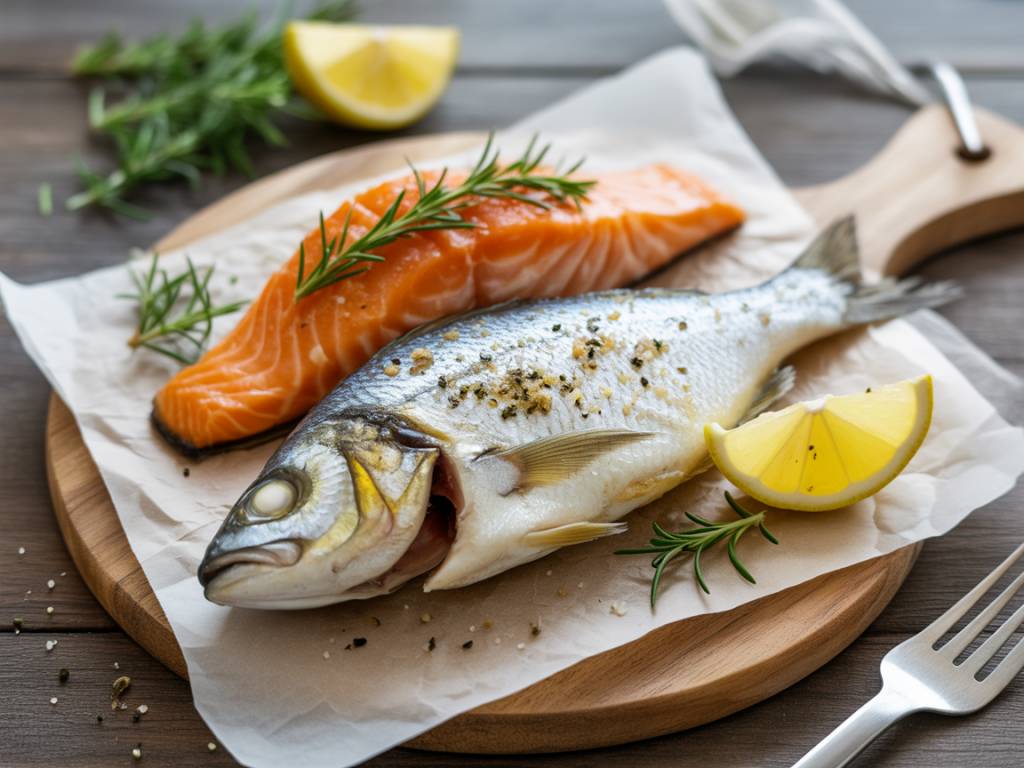
Fish has a reputation as a “light and healthy” option – and most of the time, it is. But how it’s cooked can completely change its calorie content and impact on weight loss. Baked salmon and fried salmon have very different stories to tell on your plate.
In this article, we’ll look at how many calories you actually add when you fry fish, how baking compares, and what this means if you’re trying to lose weight without giving up flavor.
Why cooking method matters more than you think
Fish itself is usually quite lean (except for fatty fish like salmon, mackerel, or sardines – which are rich in healthy fats). The “problem” rarely comes from the fish… but from what you cook it in.
When you fry fish, two things happen:
- It absorbs oil (and oil is extremely calorie-dense)
- It’s often coated in batter or breadcrumbs, adding more calories and refined carbs
Baking, on the other hand, typically uses little to no added fat. Even if you drizzle a bit of olive oil, the total is usually far less than what the fish absorbs in a deep fryer or in a pan full of oil.
So the main calorie difference is not “baked vs fried” as such – it’s “minimal added fat vs lots of added fat”. Let’s put some numbers on that.
Calorie comparison: baked fish vs fried fish
To keep things simple, let’s compare a typical 150 g (about 5 oz) fillet of white fish, like cod or haddock. These are commonly baked or fried, especially in dishes like classic fish and chips.
Plain, baked white fish (150 g)
- Calories: ~140–160 kcal
- Protein: ~30 g
- Fat: ~2–4 g
- Carbs: 0 g
This is a very lean, high-protein, low-calorie food. Perfect for weight loss.
Same fish, breaded and deep-fried (150 g cooked)
- Calories: ~300–450 kcal (sometimes more, depending on batter and oil absorption)
- Protein: ~20–25 g (slightly less because part of the weight now comes from batter and oil)
- Fat: ~18–25 g (mostly from frying oil)
- Carbs: ~15–25 g (from batter or breadcrumbs)
So, the same size piece of fish can have roughly 2–3 times more calories when fried instead of baked.
Even pan-frying with a generous amount of oil can easily add 100–200 calories, depending on how much the fish absorbs.
Where do all those extra calories come from?
Oil is the main culprit, and it’s sneaky. You don’t always realize how much is being absorbed.
1 tablespoon of oil = about 120 kcal.
Now imagine:
- Deep-frying: the fillet is surrounded by hot oil. It can easily soak up 2–3 tablespoons (or more), adding 240–360 kcal.
- Pan-frying: even if you start with just 1 tablespoon, you often add a bit more, and the fish absorbs part of it.
With baking, it’s entirely possible to cook a fillet with:
- 0 added fat, or
- Just 1 teaspoon of oil (about 40 kcal) brushed on top for flavor and texture.
That’s a huge difference over time, especially if you eat fish regularly.
What this means for weight loss
If you’re trying to lose weight, your overall daily calorie balance is the key. You want to eat fewer calories than you burn, but still feel satisfied and nourished.
Fish can be a powerful ally for that goal when it’s prepared in a smart way.
Baked fish gives you:
- High-quality protein that keeps you full
- Very few calories if it’s a lean fish
- Healthy fats if it’s a fatty fish like salmon, without excessive added oil
Fried fish, on the other hand:
- Packs in lots of extra calories from oil and batter
- Often appears in heavier meals (fries, sauces, bread, etc.)
- Can easily turn a light dinner into a calorie bomb
Imagine these two dinners:
Option A – Baked fish plate
- 150 g baked cod with herbs (~150 kcal)
- 200 g steamed vegetables with a drizzle of olive oil (~100–120 kcal)
- 100 g boiled potatoes (~80 kcal)
Total: roughly 330–350 kcal
Option B – Fried fish plate
- 150 g battered, fried cod (~350–400 kcal)
- 150 g fries (~350 kcal)
- 2 tablespoons tartar sauce (~120 kcal)
Total: about 820–870 kcal
Same base ingredient (fish), very different impact on your daily calorie budget.
What about fatty fish like salmon?
Salmon is naturally higher in fat than white fish, but these fats are mostly omega‑3s, which are beneficial for heart and brain health. That doesn’t mean calories disappear, though.
150 g baked salmon (no added fat):
- Calories: ~280–320 kcal
- Protein: ~30–32 g
- Fat: ~18–20 g (mostly unsaturated)
150 g breaded, fried salmon:
- Calories: ~450–550 kcal (or more)
- Protein: ~25–30 g
- Fat: ~30–35 g (mix of salmon fat + frying oil)
- Carbs: from breading/batter
The pattern is the same: the fish itself isn’t the problem. The frying method adds a lot of extra energy, often without bringing much more satiety.
“But baked fish is boring…” Is it really?
This is where most people give up: “Fried fish tastes better.” Does it? Or is it the crunch, the salt, and the fat that your brain loves?
You can actually make baked fish incredibly tasty with:
- Fresh herbs (dill, parsley, thyme, coriander)
- Spices (paprika, cumin, curry, garlic powder, smoked paprika)
- Citrus (lemon or lime juice and zest)
- A light marinade (yogurt, herbs, a teaspoon of olive oil, garlic)
Try this simple idea:
Marinate white fish in lemon juice, garlic, smoked paprika, and a teaspoon of olive oil. Bake it on a bed of sliced onions and cherry tomatoes. You get flavor, juiciness, and a lovely roasted taste, with a fraction of the calories of frying.
And if you miss the “crunch”, you can:
- Use a light coating of whole-wheat breadcrumbs and bake
- Use crushed cornflakes or panko, sprayed with a little oil and baked
- Use an air fryer for a crispy texture with much less oil
It’s not exactly like classic deep-fried fish, but your body will thank you – especially if weight loss is your goal.
How often can you eat fried fish and still lose weight?
No food needs to be banned forever, not even fried fish. The key is frequency and portion size.
If you’re in a calorie deficit most of the week, you can absolutely enjoy fried fish occasionally as a treat.
A few practical rules of thumb:
- Most of the time, bake, grill, or steam your fish. Save frying for rare occasions.
- When you do eat fried fish, reduce calories elsewhere that day. For example, lighter breakfast and lunch, more vegetables, fewer added fats.
- Watch the side dishes. The “damage” often comes from fries, sauces, bread, and sugary drinks on the side of your fried fish.
If you’re eating fried food several times per week, it’s going to be hard to maintain a calorie deficit without feeling restricted the rest of the time.
Smart swaps to keep the flavor and cut the calories
Here are some easy swaps to keep your meals satisfying while aligning them with your weight loss goals:
- Swap deep-fried fish for baked or air-fried fish.
Same protein, similar enjoyment, far fewer calories. - Swap thick batter for light breading or just spices.
Try spices, lemon, and herbs instead of heavy coatings. If you want crunch, use a thin layer of panko and bake. - Swap fries for roasted or boiled potatoes.
Same vegetable, but baked wedges with a teaspoon of oil and spices can be just as satisfying as deep-fried fries. - Swap heavy sauces for lighter ones.
Mix Greek yogurt with mustard, lemon, herbs, and a pinch of salt instead of mayonnaise-based sauces. - Swap large portions for balanced plates.
Fill half your plate with vegetables, a quarter with fish, and a quarter with a smart carb (potatoes, quinoa, brown rice).
Protein, satiety, and why fish is your ally
One of the main challenges in weight loss is staying full while eating fewer calories. That’s where protein helps.
Fish is an excellent source of high-quality protein, which:
- Increases satiety (you feel full longer)
- Helps maintain muscle mass when losing weight
- Supports recovery if you exercise regularly
Baked fish gives you these benefits without the calorie overload. Fried fish still gives you protein, of course, but you’re “paying” for it with a lot of extra fat from the oil.
From a pure weight loss perspective, it’s more “cost-effective” to get your protein from baked, grilled, or steamed fish and use your daily calories on foods that bring fibers, micronutrients, and healthy fats – rather than on frying oil.
Practical tips to make baked fish a weekly habit
Knowing that baked fish is better for weight loss is one thing. Actually eating it regularly is another. Here are a few strategies to make it easier:
- Buy frozen fillets.
They’re convenient, often cheaper, and you can keep them on hand for quick dinners. Just check the label for added sauces or breading. - Pre-make spice mixes.
Create a jar with your favorite mix (for example: paprika, garlic powder, onion powder, black pepper, oregano) and sprinkle it on fish before baking. - Use baking paper or a silicone mat.
This reduces the need for oil and makes cleanup easier. Less friction = more consistency. - Cook once, eat twice.
Bake extra fish and use the leftovers in a salad or wrap the next day. Great for lunches that support your weight goals. - Pair with flavorful vegetables.
Roast peppers, tomatoes, zucchini, or broccoli in the same oven tray. Lots of volume, few calories, and plenty of taste.
What about air fryers – a good compromise?
Air fryers have become very popular, and for good reason. They use hot air to mimic the texture of frying, with much less oil.
If you cook fish in an air fryer with just a light spray of oil or a teaspoon brushed on, you get:
- A crispy outside
- Juicy inside
- Far fewer calories than deep-frying
Is it as low-calorie as plain baking without any oil? Not always. But it’s generally much closer to baked fish than to classic fried fish in terms of calorie impact.
If you love “fried-style” fish and want to lose weight, an air fryer can be a very interesting tool.
Putting it all together for your weight loss journey
Let’s recap the key points and translate them into simple, actionable ideas you can use right away:
- The fish itself is rarely the problem. Most of the extra calories come from the frying oil and batter.
- Baked fish typically has about 2–3 times fewer calories than breaded, fried fish of the same weight.
This matters a lot when you’re trying to maintain a calorie deficit. - For weight loss, choose baked, grilled, steamed, or air-fried fish most of the time.
Keep classic fried fish as an occasional pleasure, not a daily habit. - Watch what’s around the fish.
Side dishes and sauces can silently double the calories of your meal. - Focus on flavor, not just “healthiness”.
Use herbs, spices, citrus, and light marinades so that your healthier dishes are also dishes you actually enjoy eating.
In the end, you don’t have to choose between enjoying your food and progressing toward your ideal weight. By simply switching from fried to baked fish most of the time, you can save hundreds of calories per week – without feeling deprived, and without giving up one of the best sources of lean protein in your diet.