


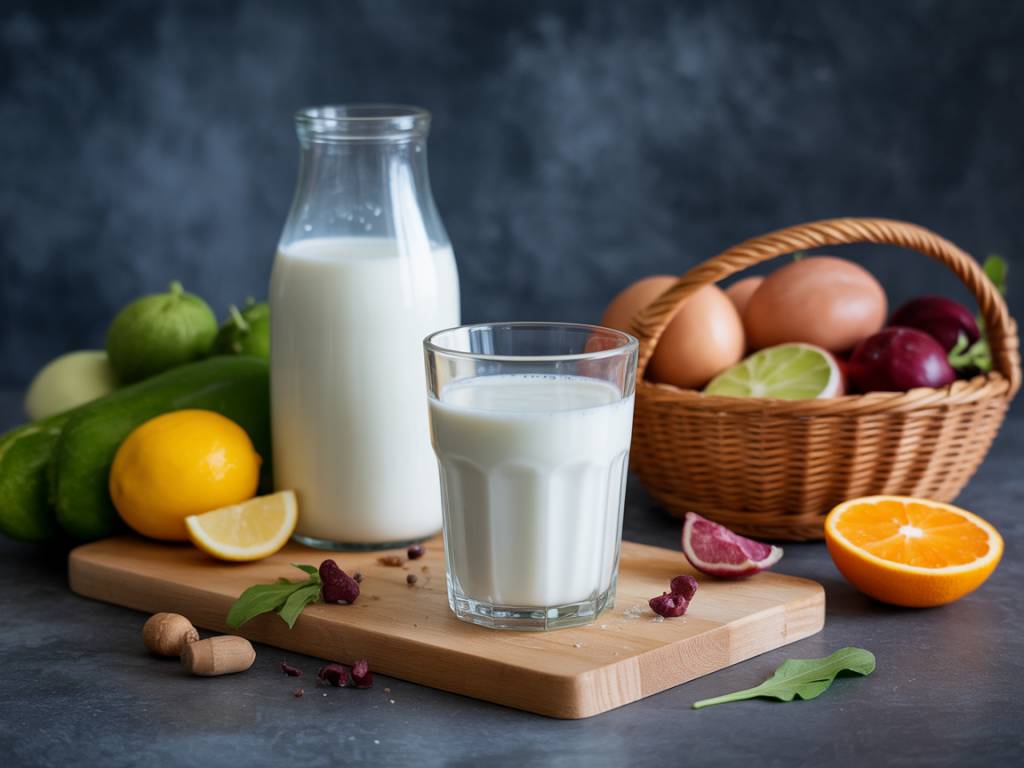
For decades, a glass of milk a day was almost a rule: at breakfast, after school, before bed. Today, things are more nuanced. Plant-based drinks are everywhere, lactose intolerance is better understood, and many people wonder: does milk still have a place in a modern, healthy eating pattern?
As always in nutrition, the honest answer is: it depends. On your goals, your health, your culture, and your preferences. But it doesn’t mean we can’t be precise.
What does milk actually bring to the table?
Let’s start with the basics. A typical 250 ml glass of cow’s milk (semi-skimmed, ~1.5–2% fat) contains approximately:
- Calories: ~110–130 kcal
- Protein: ~8 g of high-quality, complete protein (all essential amino acids)
- Fat: ~4–5 g (depending on fat content)
- Carbohydrates: ~12 g (mostly lactose)
- Calcium: ~300 mg (about 30% of most adults’ daily needs)
- Vitamin B12: ~45–50% of daily needs
- Riboflavin (B2), iodine, phosphorus, potassium, vitamin A (if fortified) and, in many countries, vitamin D (if fortified)
From a purely nutritional point of view, milk is a dense package of:
- High-quality protein – useful for muscle maintenance, satiety, and recovery after exercise.
- Calcium + vitamin D (if fortified) – crucial for bone health and muscle function.
- Key micronutrients that many people lack – like B12 and iodine.
That’s the scientific “resume” of milk. The real question is: how does it fit into your day in a way that supports health, without becoming a nutritional obsession or a default choice?
How much milk per day is reasonable?
There’s no universal “must” with milk. Most international guidelines talk in servings of dairy rather than prescribing milk itself. Common recommendations:
- 1–3 servings of dairy per day (milk, yogurt, cheese, kefir), depending on age, energy needs, and health status.
- One serving is roughly:
- 250 ml of milk or fortified plant drink
- 150–200 g of yogurt
- 30 g of hard cheese
For many healthy adults, 1–2 glasses (250–500 ml) of milk per day can fit comfortably into a balanced diet, provided your total calories, protein, and fat intake match your goals. For some people, less (or none) is perfectly fine. For others, especially those with high protein or calcium needs, milk can be a convenient ally.
The right intake depends mainly on:
- Your total diet – Are you getting enough protein and calcium from other sources?
- Your energy needs – Highly active? Milk can help; sedentary with low energy needs? You may need to be more selective.
- Your tolerance – Lactose intolerance or milk protein allergy changes the picture completely.
- Your ethical and environmental choices – You might prioritize plant-based options.
Milk and modern dietary patterns: where does it fit?
Healthy eating is no longer about “one perfect diet for everyone”. We talk about patterns: Mediterranean, flexitarian, plant-based, high-protein, low-carb, etc. Let’s see how milk can (or cannot) fit into some of these.
In a Mediterranean-style pattern:
Dairy is typically present in moderate amounts, mainly as yogurt and cheese. Milk can be there too, but it’s not the star of the show. If you enjoy a small glass with breakfast or use it in coffee, it can align very well with this pattern, as long as:
- Vegetables, fruits, whole grains, legumes, nuts, seeds and olive oil remain the foundation.
- Dairy is not replacing these nutrient-dense foods but complementing them.
In a plant-forward or flexitarian diet:
You might reduce animal products but not eliminate them. In that context, milk can serve as:
- A convenient source of protein if you’re cutting back on meat.
- A calcium and B12 booster if your plant-based meals are not always perfectly planned.
You can also mix and match: cow’s milk at breakfast, fortified soy drink in smoothies, plain yogurt as a snack. The key is diversity and balance.
In a fully plant-based diet:
Cow’s milk is obviously off the menu. But the role of milk (protein, calcium, iodine, B12, vitamin D) can be covered by:
- Fortified plant drinks (ideally soy-based or pea-based for protein quality).
- Calcium-set tofu, sesame seeds (tahini), leafy greens, fortified juices.
- B12 supplements and fortified foods.
So, a healthy modern diet doesn’t require milk. But for those who tolerate it and enjoy it, it can be a useful tool.
Milk, weight management and satiety
One of the biggest questions people ask: “Does milk make you gain weight?” The unsatisfying—but accurate—answer: it depends on context.
A few important points:
- Protein is satiating. Milk’s 8 g of protein per glass help you feel fuller than the same calories from sugary drinks or juice.
- Liquid calories are easy to overconsume. If you’re drinking large lattes, milkshakes, or chocolate milk throughout the day, the calories add up fast.
- Plain vs. flavored matters. Many “milk drinks” are really sugar bombs. The benefits of milk are easily offset by high added sugar.
In practice, milk can be either a smart ally in weight management or a hidden calorie trap. It depends on how you use it:
- Smart uses: a glass of milk with fruit and nuts as a satisfying snack; milk in a recovery smoothie after training; milk as part of a balanced breakfast with oats and berries.
- Less smart uses: several large flavored lattes per day; sweetened chocolate milk as a “thirst drink”; milk used mainly in desserts.
Modern healthy eating is about paying attention to context: not “is milk good or bad?” but “in this meal, for this goal, is milk adding value?”
Milk and bone health: still relevant?
Milk and dairy have long been promoted for bone health, especially for children and older adults. The science is more nuanced than the marketing, but there are some solid points:
- Milk provides calcium, protein, phosphorus and often vitamin D – all relevant for bone maintenance.
- For children and adolescents, dairy products can help achieve optimal peak bone mass.
- For older adults, adequate protein and calcium intake helps limit bone loss, especially combined with resistance training and sufficient vitamin D.
However:
- You can have excellent bone health without milk if your overall diet and lifestyle are well designed (resistance exercise, vitamin D, calcium from other sources).
- You can also drink milk and still have fragile bones if you smoke, are sedentary, or have chronically low vitamin D.
So yes, milk can be a convenient part of a bone-friendly strategy, especially for people who struggle to reach their calcium or protein targets. But it’s one piece among many.
What about lactose intolerance and sensitivity?
Here’s where modern nutrition has really improved: we now recognize that not everyone digests milk the same way.
Lactose intolerance means you don’t produce enough lactase, the enzyme that breaks down lactose (milk sugar). Typical symptoms appear several hours after consuming regular milk:
- Bloating
- Gas
- Abdominal cramps
- Sometimes diarrhea
If this sounds like you, there are options that still allow a “milk-like” experience within a healthy pattern:
- Lactose-free milk: same nutrients, lactose already broken down.
- Yogurts and fermented dairy: usually better tolerated thanks to bacterial fermentation and lower lactose content.
- Hard and aged cheeses: very low in lactose.
- Fortified plant drinks: soy, pea, oat (check they’re fortified with calcium, B12, iodine and sometimes vitamin D).
Milk protein allergy is different and more serious. It involves the immune system and often appears in childhood. In that case, milk and dairy are completely off-limits, and plant-based alternatives are needed.
A modern approach to nutrition is inclusive: if milk causes you discomfort, you’re not “missing out” as long as your diet is well planned. You can still build a powerful, health-supporting diet without a drop of cow’s milk.
Whole, semi-skimmed, or skimmed: which milk to choose?
For years, the recommendation was clear: choose low-fat or skimmed milk. Today, the message is more nuanced.
Some observational studies suggest that whole-fat dairy is not associated with higher cardiovascular risk in healthy individuals, and may even be neutral or modestly beneficial in some contexts. But we need to consider the total diet:
- If your diet is already high in saturated fats (processed meats, pastries, fast food), going for semi-skimmed or skimmed might be wiser.
- If your diet is mostly whole, minimally processed, and you’re in good metabolic health, moderate amounts of whole milk can fit without issue.
- If you’re trying to reduce calorie intake without losing protein or calcium, semi-skimmed or skimmed milk can be a practical option.
In short, the best choice is the one that:
- Matches your taste and satiety.
- Fits your overall fat and calorie goals.
- Doesn’t push your saturated fat intake too high once you look at the entire day.
Practical ways to integrate milk into a healthy day
Enough theory. How can milk fit into a modern, health-oriented routine in a smart, intentional way?
At breakfast:
- Oats cooked with semi-skimmed milk, topped with berries and a spoonful of nuts or seeds.
- A small latte with mostly milk and little added sugar, paired with wholegrain toast and eggs.
- Greek yogurt and fruit, with a splash of milk in coffee.
As a snack:
- A glass of milk plus a handful of almonds or walnuts.
- A fruit smoothie: milk, frozen berries, a scoop of oats, maybe a bit of peanut butter.
- Kefir or fermented milk drink for those who like a tangy flavor and want a probiotic boost.
After exercise:
- Milk + banana + cocoa powder in a blender: simple recovery shake with protein and carbs.
- Chocolate milk (preferably with limited added sugar) as an occasional post-workout option for endurance athletes.
In cooking:
- Using milk in vegetable soups to add creaminess without heavy cream.
- In homemade sauces, controlling salt and fat better than many industrial versions.
- In baked dishes like egg-based casseroles or quiches with plenty of vegetables.
The idea is not to drink milk all day, but to use it strategically: as a protein-rich, nutrient-dense ingredient that supports your goals.
When might reducing milk be a good idea?
Even if you tolerate milk well, there are situations where reducing intake makes sense:
- Digestive discomfort that appears consistently after drinking milk, even if tests haven’t confirmed intolerance.
- Very high saturated fat intake from multiple sources, especially if you have cardiovascular risk factors.
- Preference to get more variety from other protein sources: legumes, fish, eggs, tofu, lean meats, nuts.
- Ethical or environmental choices leading you to prioritize plant-based options most of the time.
The healthy, modern approach is flexibility. You don’t need to label milk as “superfood” or “enemy”. You can adjust your intake as your lifestyle, health, and beliefs evolve.
Key takeaways for your daily pattern
If we had to summarize how milk fits into a modern healthy eating pattern, it might look like this:
- You can have an excellent diet with or without milk. It’s a choice, not an obligation.
- For most healthy adults, 0–2 glasses (0–500 ml) of milk per day can fit comfortably into a balanced diet, especially if you favor plain, unsweetened forms.
- Milk can be particularly useful if you:
- Struggle to reach your protein or calcium needs.
- Are very physically active and need convenient recovery options.
- Enjoy it and tolerate it well.
- If you choose not to drink milk, pay attention to:
- Alternative sources of calcium, vitamin B12, iodine and vitamin D.
- Including fortified plant drinks and supplements when needed.
- Always look at the whole day, not just one food: milk is one tool in a much larger toolbox.
A modern, healthy eating pattern is flexible, evidence-informed, and tailored to you. If milk helps you move closer to your goals—more protein, better bone support, easier meal building—then it has a perfectly valid place at your table. If not, there are plenty of other ways to nourish your body effectively.